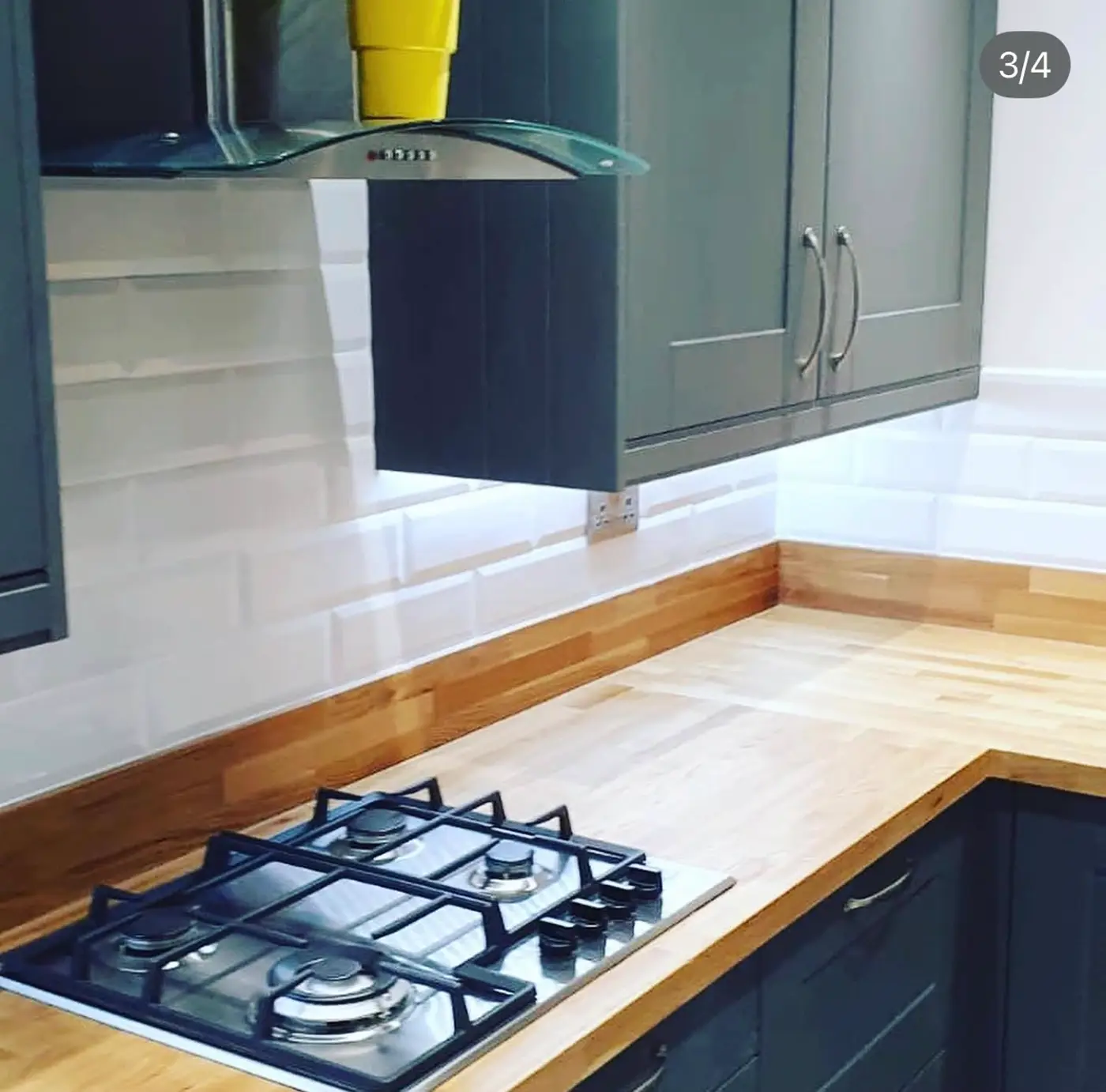
Old houses need setting out, not speed
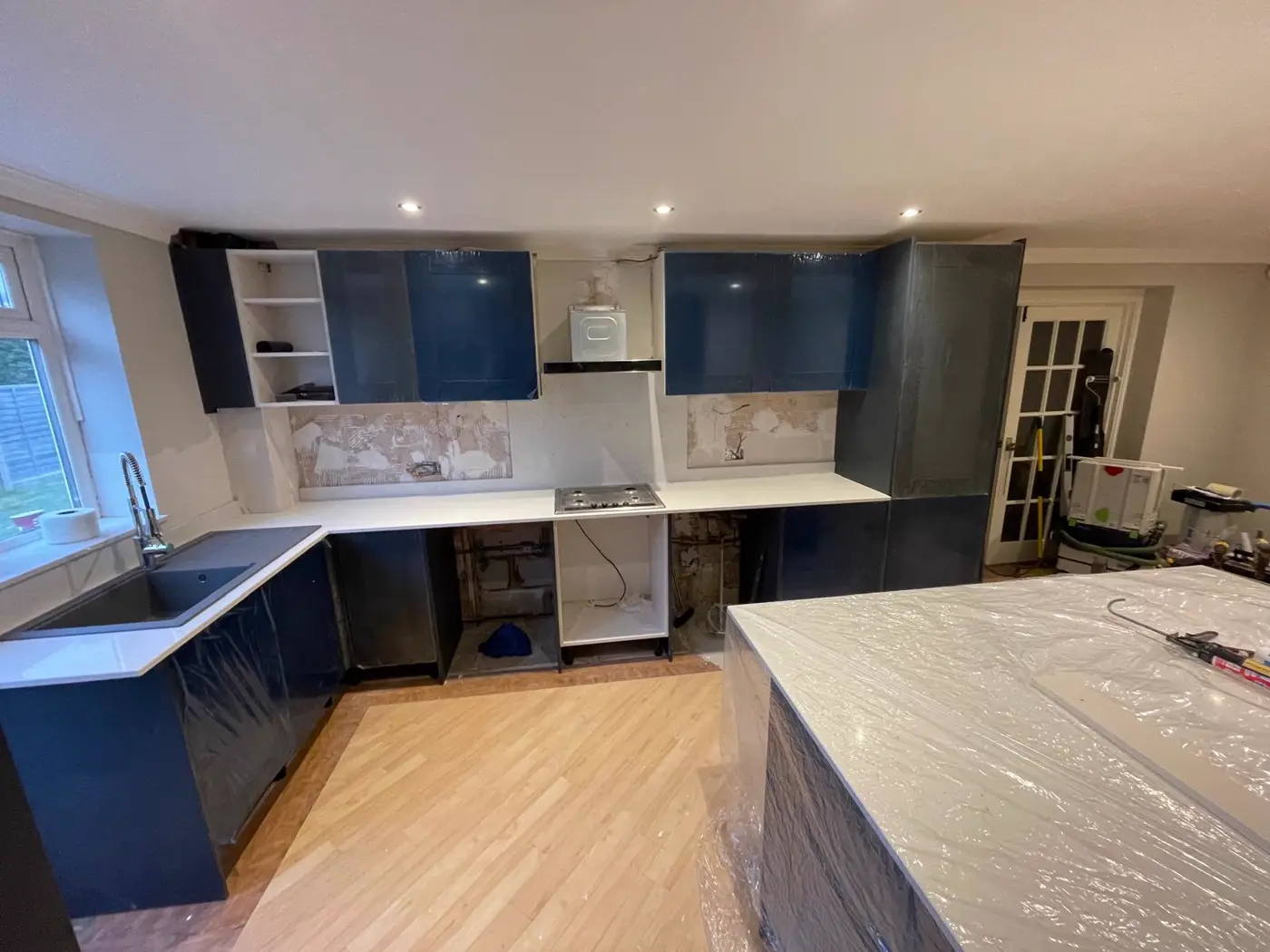
Saffron Walden has one of the largest concentrations of listed buildings in Essex. Timber-framed houses move, floors slope, and there is rarely a wall that is plumb or a corner that is 90 degrees. Every cabinet goes on adjustable legs set to a laser line, plinths and cornice are scribed by hand, and the worktop is templated after the cabinets are in. It is slower and it is the only way these kitchens come out looking deliberate.
Listed building consent — what actually needs it
Replacing units in a room that has already been modernised generally does not need consent. Cutting chases into historic plaster, removing panelling, altering a chimney breast or forming a new external vent usually does. We tell you which side of that line your job sits on before we quote, and we will speak to Uttlesford conservation on your behalf if it is borderline. We do not start work and find out afterwards.
Freestanding, semi-fitted, or fully fitted
In a period Walden kitchen a semi-fitted approach — a run of fitted base units, a range, and a freestanding dresser or island table — often looks right where a wall-to-wall fitted kitchen looks wrong, and it costs less. We will say so at survey if that is what the room wants, even though it is a smaller invoice for us.
Ranges, ovens and the electrics
A lot of CB10 and CB11 kitchens have a range cooker in an old chimney recess. Recess depth, hearth condition, extraction and heat clearance all need checking before you commit to a model. Electric ranges typically want a dedicated 32A circuit, and older Walden consumer units frequently have no spare way — we test at survey and price the upgrade openly rather than raising it on day ten.
One team, in-house, from strip-out to snagging
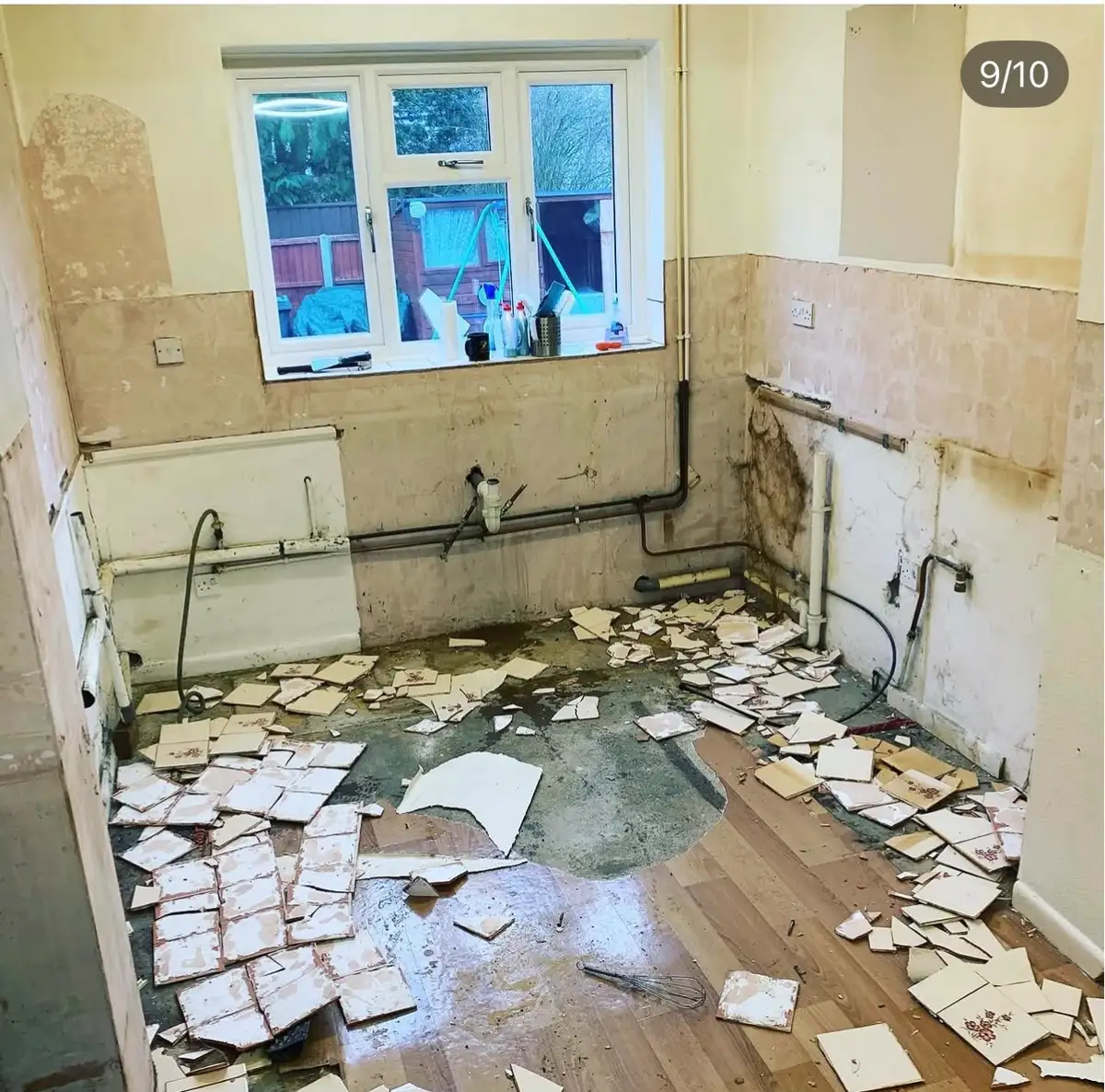
Carpentry, plumbing, electrics, tiling, plastering and decorating are all our own people, which matters most in old buildings where one trade constantly uncovers work for another. Gabriel has been on the tools since 2001 and prices every job himself after seeing the room.