Substrate first, tile second
Nine out of ten failed tile jobs in CM7 are substrate failures, not tile failures. Timber floors are overboarded or decoupled, screeds are moisture-checked and primed, and old adhesive beds are ground back instead of tiled over. That preparation is quoted in, not added later as an extra.
Large-format porcelain and natural stone
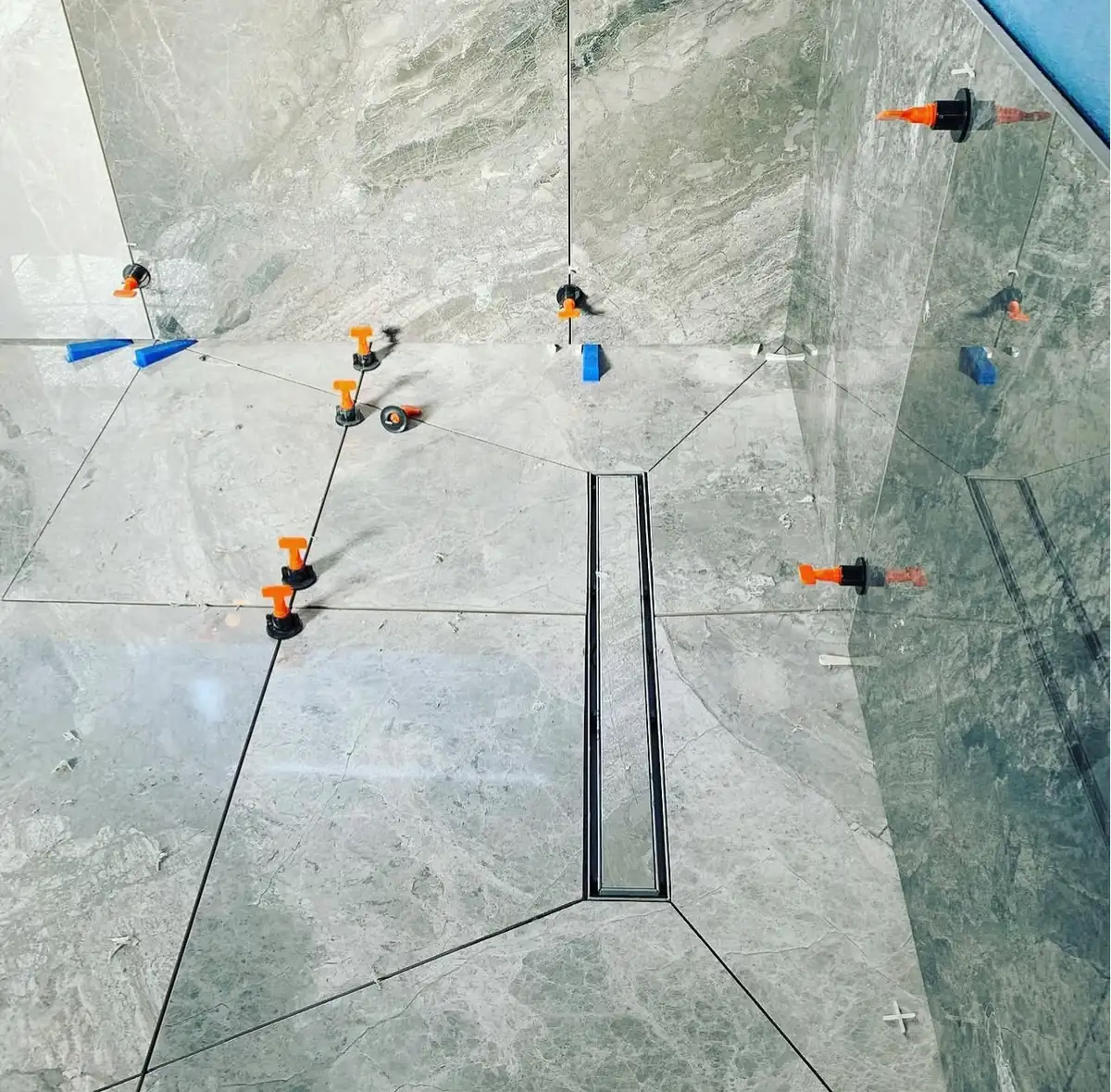
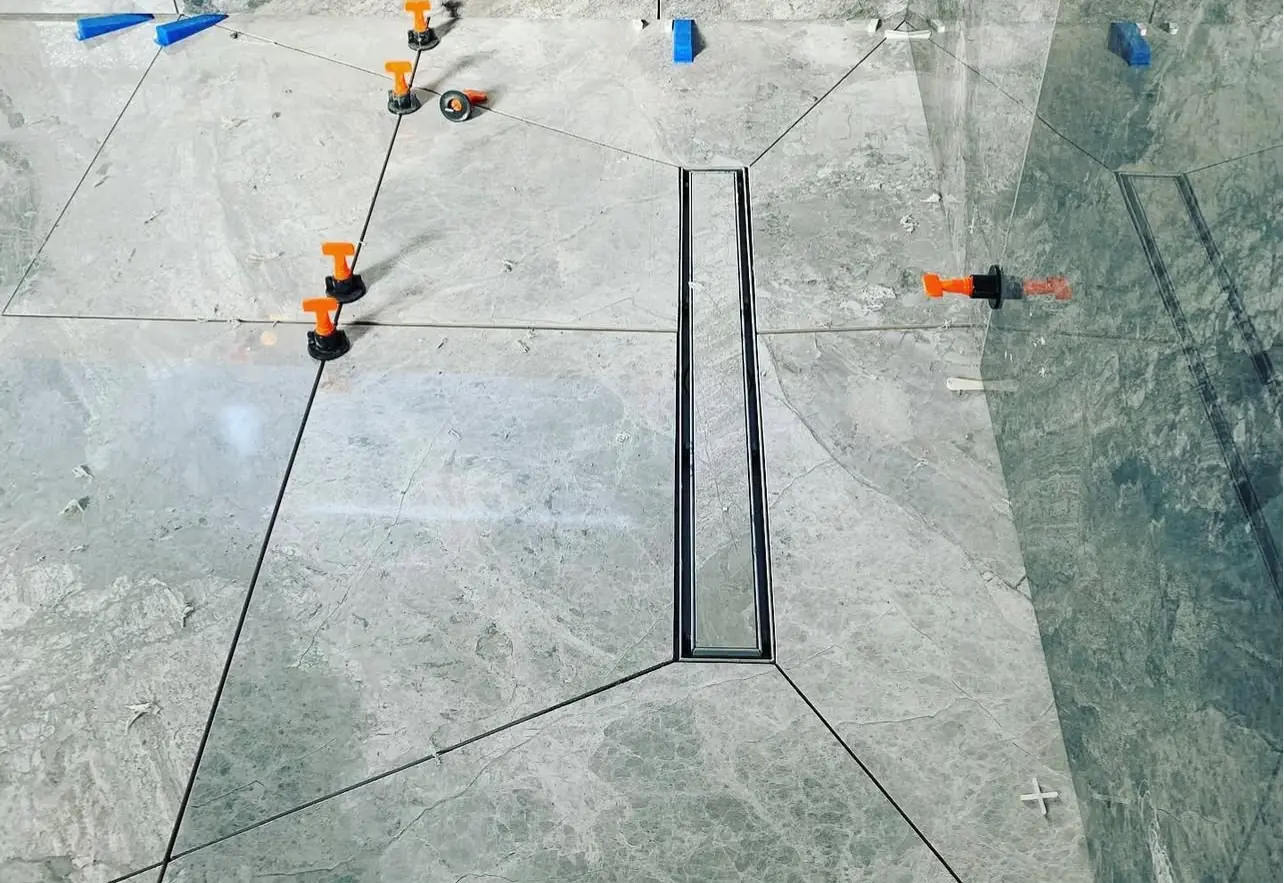
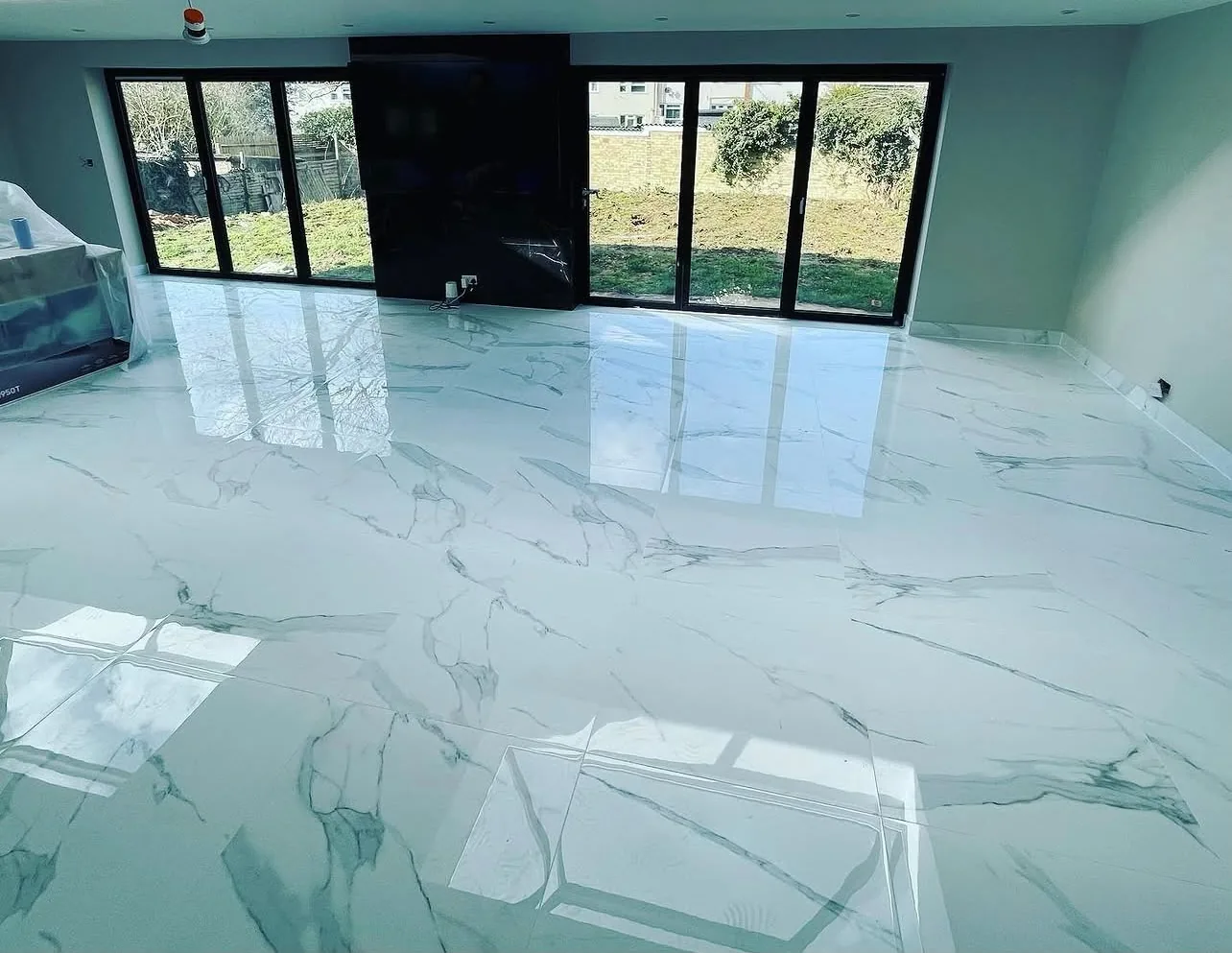
Slabs over 60cm need a flat bed, back-buttering and a solid-bed coverage above 95%, or they ring hollow and crack at the corner. We work with levelling clips, a laser and a wet saw on site so cuts, mitres and shadow gaps are cut to the room rather than to the drawing.
Wet rooms, tanking and falls
Shower areas are tanked over primed, screw-fixed boards with matting tape in the internal corners and collars on the pipe penetrations. Falls are formed with a tray former or a hand-built screed to a linear drain, then flood-tested before a single tile goes on.
Setting out is what you actually see
Set-out is agreed with you before adhesive is mixed: where the full tile lands as you walk in, where the cut goes, how the grout lines run through a doorway, and whether the pattern continues from the kitchen into the Braintree hallway. Ten minutes of set-out decides how the room reads for twenty years.
Working in Braintree
Braintree is around forty minutes east of our Essex base, so CM7 tiling is booked as one continuous block with tiles delivered and batch-checked before day one. Many Braintree homes have had a previous refit done badly — we price on what is actually behind the tiles, after a survey, not on an optimistic assumption.