Preparation is the job
A tiler is only as good as the surface underneath. In Cambridge houses that usually means overboarding a springy timber floor, self-levelling a screed that has dipped, or flattening a wall that is 15mm out over two metres before anything is set out. We price preparation openly rather than tiling over a problem and blaming the building later.
CB1 to CB4 substrates
Cambridge is bay-fronted Victorian terraces around Mill Road, Romsey and Chesterton, 1930s semis in Cherry Hinton, and newer apartments and houses at Trumpington and Eddington. Central terraces have solid walls, suspended timber floors and very tight access, so pipe routes, boarding and waste removal are planned at survey rather than improvised. That decides the boarding, adhesive class and whether a decoupling layer is needed, and it goes in the quote as a visible line.
Large format and natural stone
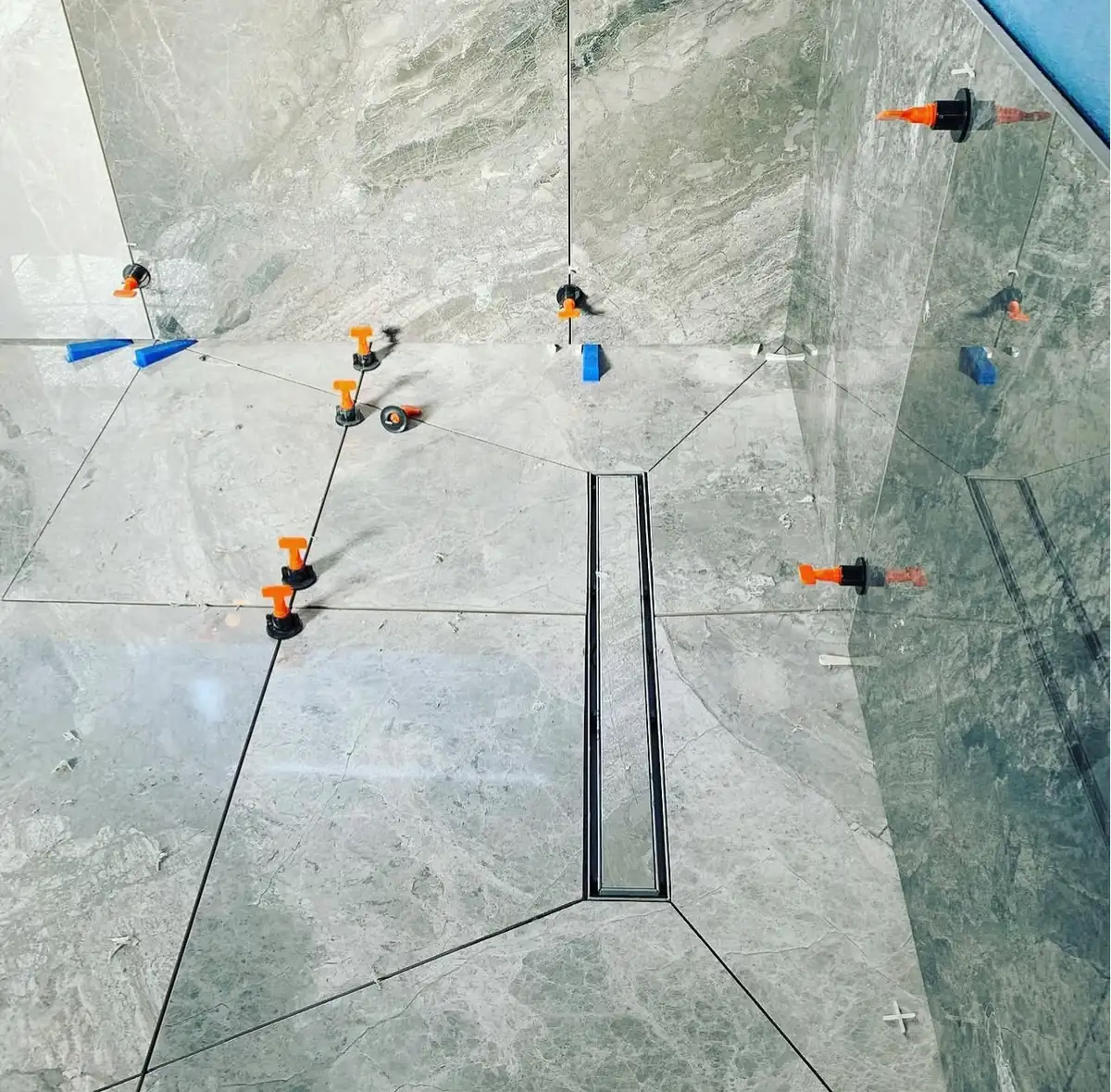
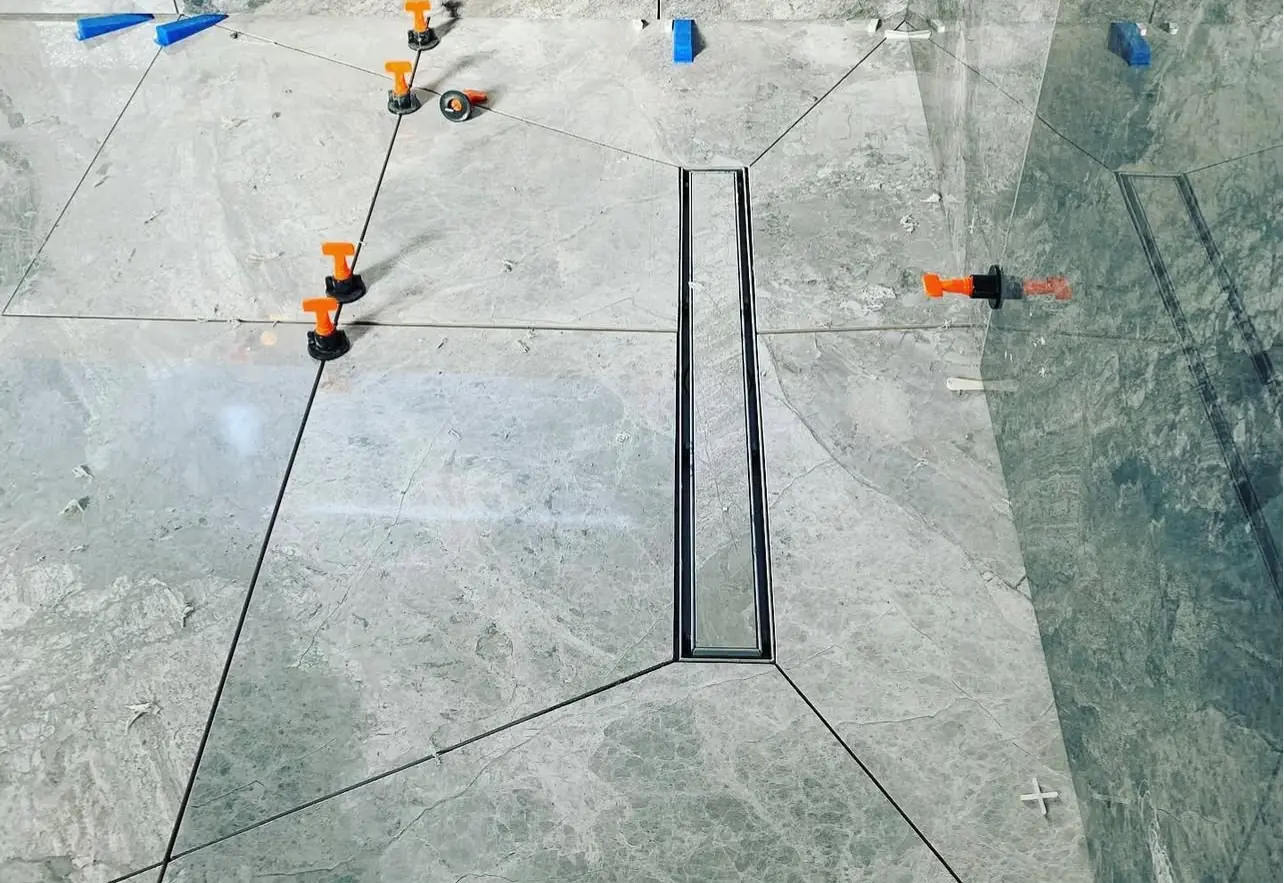
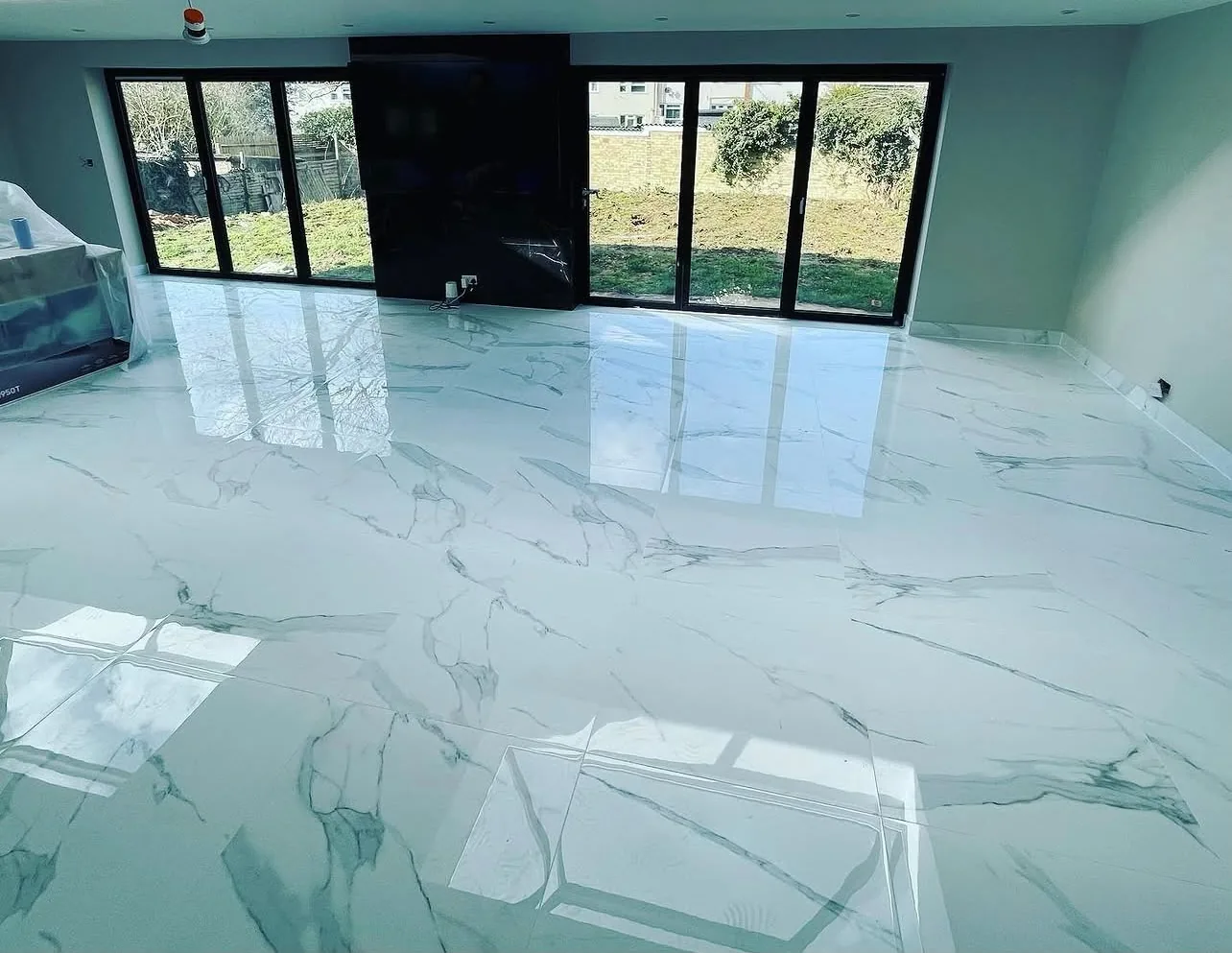
Tiles over 600x1200 need full back-buttering, a flat bed and laser-checked levels or every lip shows in raking light. Marble and light stone are sealed before grouting and fixed in white adhesive so nothing bleeds through.
Wet rooms and tanking
Wet areas get cement or foam board, two-coat tanking with taped joints and reinforced corners, formed falls and a linear drain. Tanking is never skipped to hit a price.
Tiling across Cambridge
Cambridge is around twenty-four miles from our base, so jobs are booked as continuous days — set out, fix, grout, silicone — rather than trailing over three weeks.