Preparation is most of the job
A tiler is only as good as the surface underneath. In Harlow houses that usually means overboarding a springy timber floor, self-levelling a screed that has dipped, or flattening a wall that is 15mm out over two metres before anything is set out. We price the preparation openly rather than tiling over a problem and blaming the building later.
Large-format porcelain, done without lippage
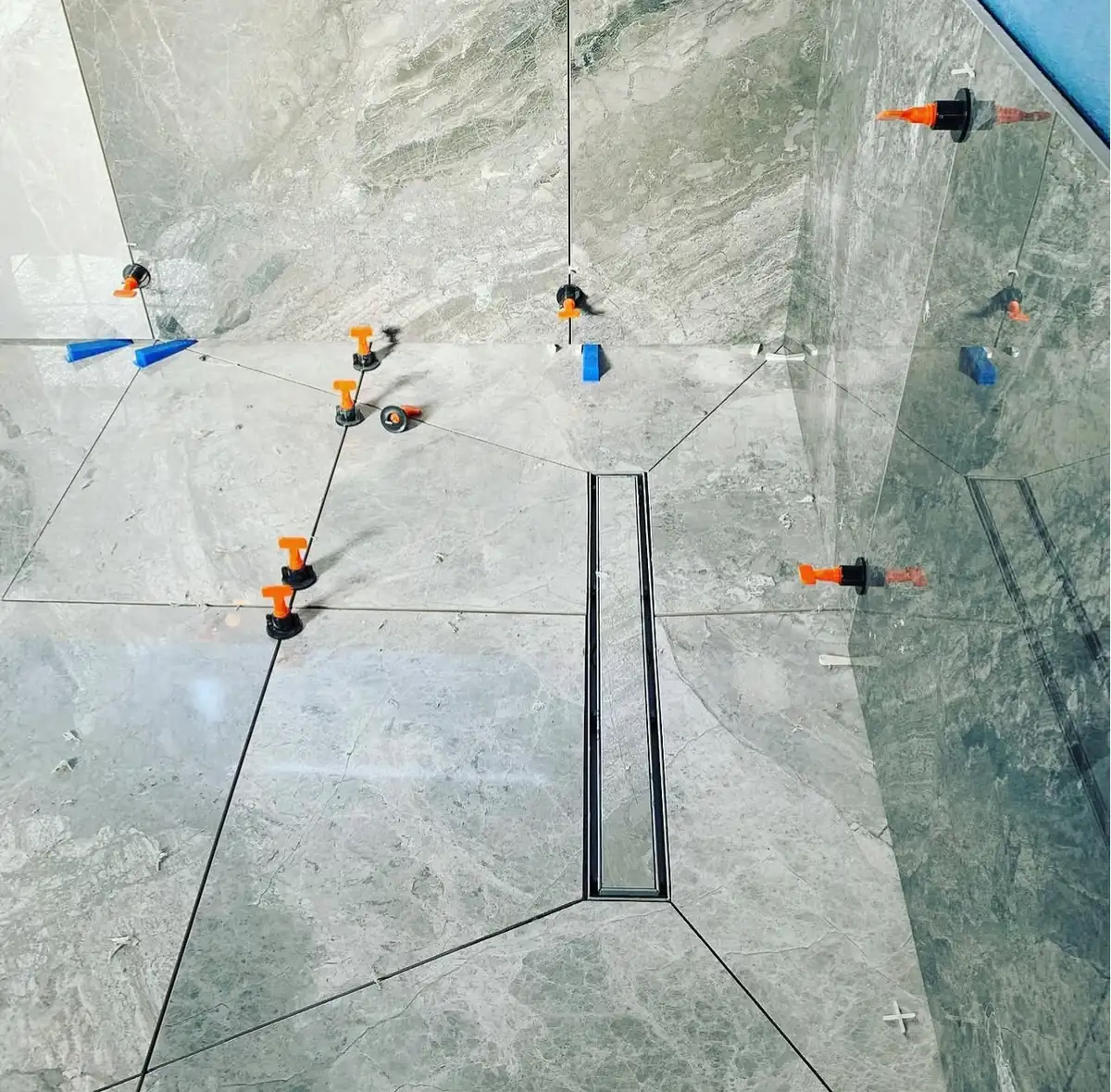
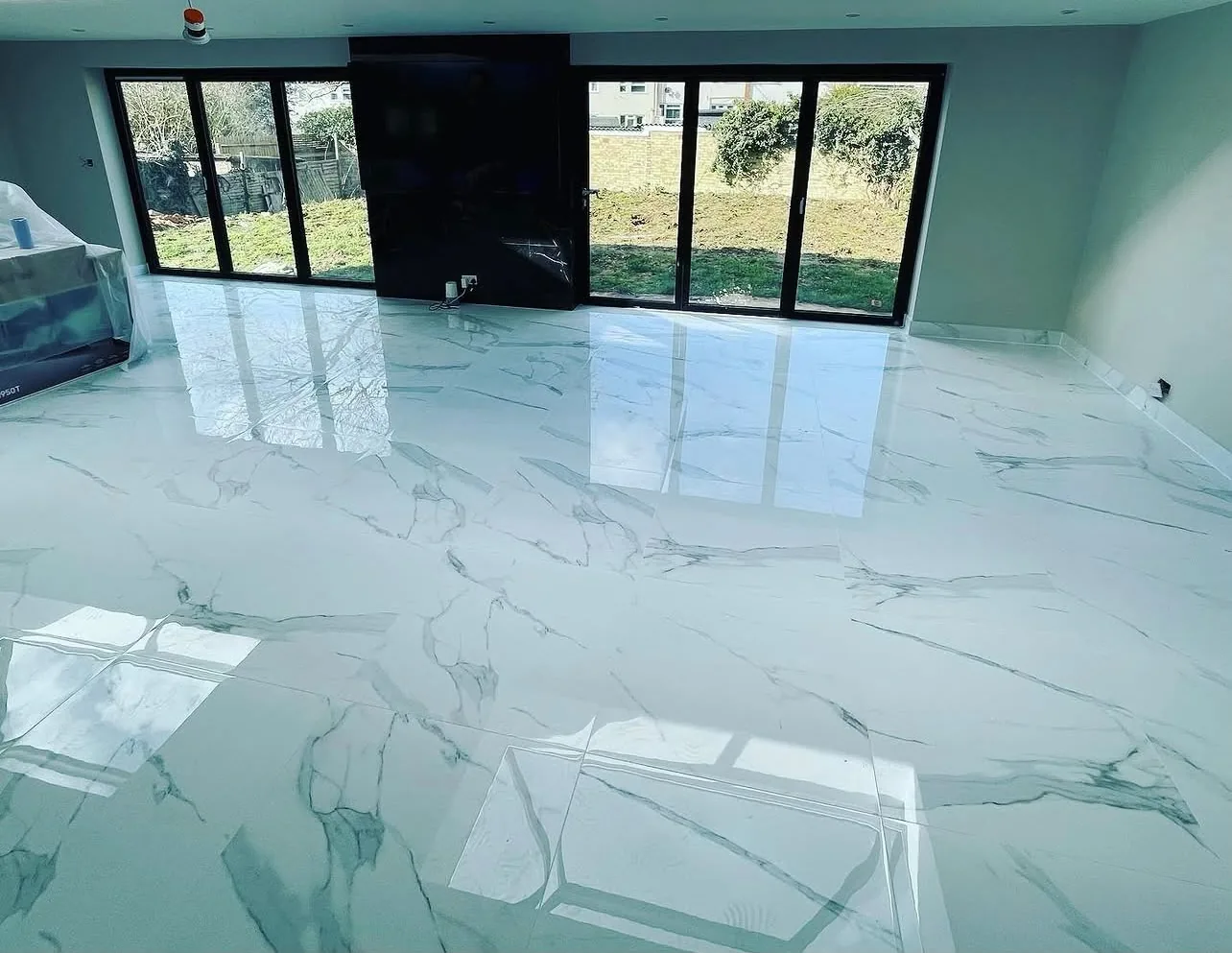
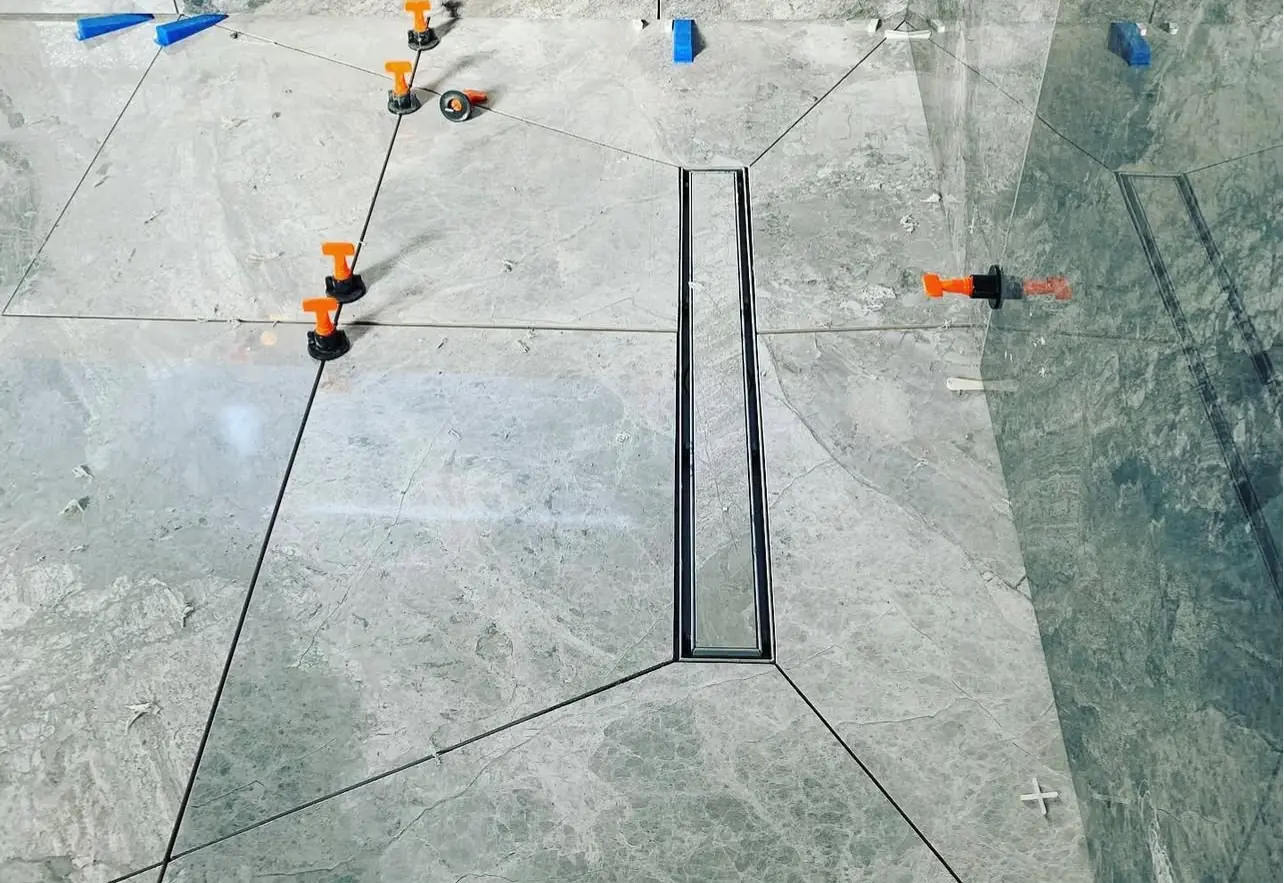
600x1200 and larger slabs show every millimetre. Full-bed back-buttering, a levelling clip system throughout, and adhesive mixed to a consistent slump — then a laser check across the run before it goes off. It is slower and it is the only way a big-format wall looks flat under a downlight.
Movement, decoupling and underfloor heating
Tiles crack because the substrate moves, not because the tile was cheap. Timber floors and heated screeds in CM17 to CM20 get a decoupling membrane, perimeter movement joints kept clear of adhesive, and silicone rather than grout at every internal corner and change of plane.
Setting out you will notice for years
Cuts get planned before a tile is fixed: full tiles at the eye line and the door, cuts hidden in corners and under the bath, grout lines run through from wall to floor where the material allows, and pattern repeats checked across boxes so shade variation does not stripe the wall.
Tiling work across Harlow
Harlow is about fifteen minutes south away, so CM17 to CM20 tiling is booked in continuous days with material delivered and checked beforehand. Most bathrooms are two to four days, a kitchen floor one to two, a large open-plan floor up to a week.