Preparation is the job
A tiler is only as good as the surface underneath. In St Albans houses that usually means overboarding a springy timber floor, self-levelling a screed that has dipped, or flattening a wall that is 15mm out over two metres before anything is set out. We price preparation openly rather than tiling over a problem and blaming the building later.
AL1 to AL4 substrates
St Albans is Victorian villas around the city centre, large 1930s detached houses and a lot of previously extended stock. City-centre villas have solid walls, lime plaster and floors cut about by generations of plumbers, so we survey what is actually there before quoting. That decides the boarding, adhesive class and whether a decoupling layer is needed, and it goes in the quote as a visible line.
Large format and natural stone
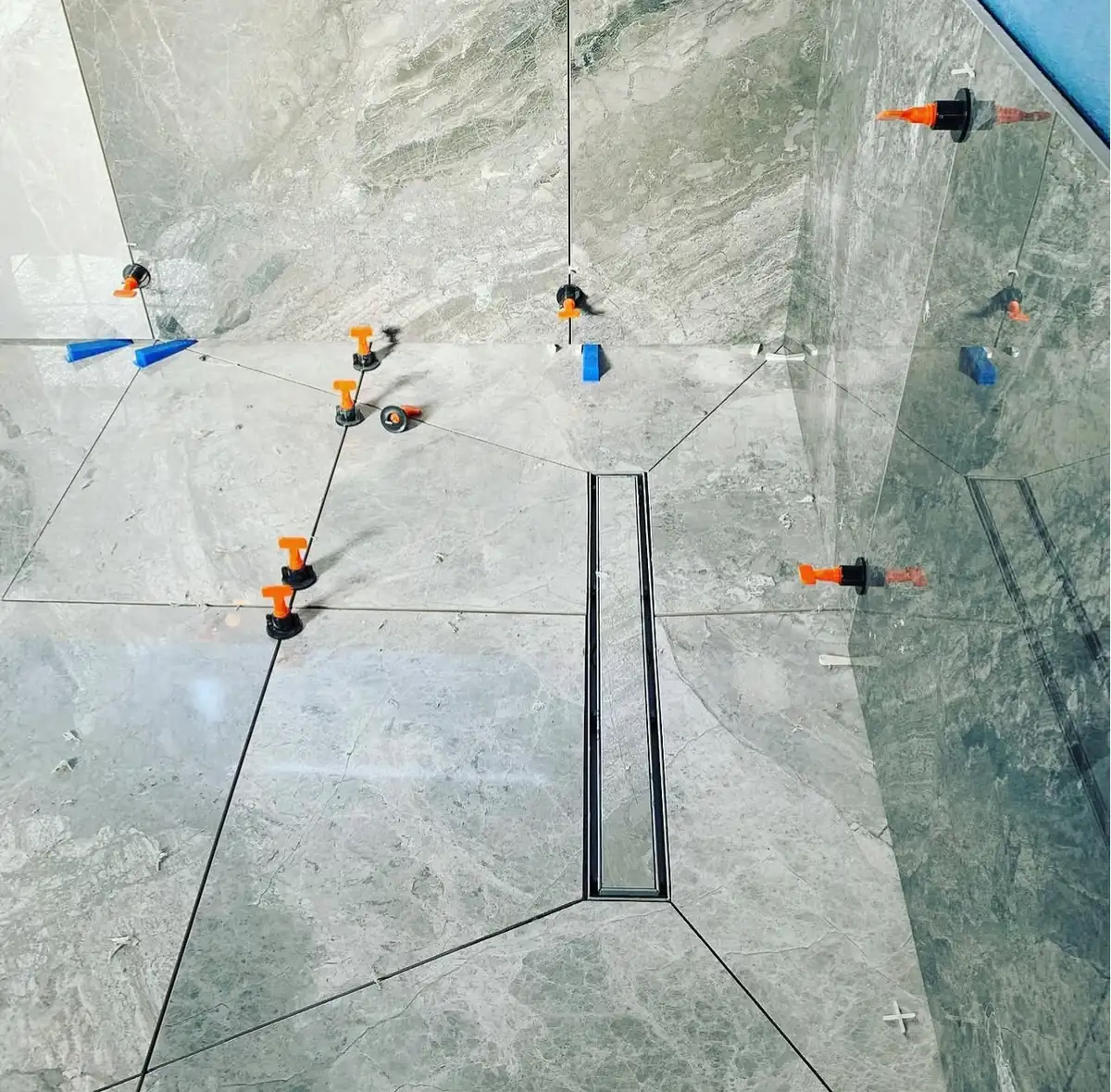
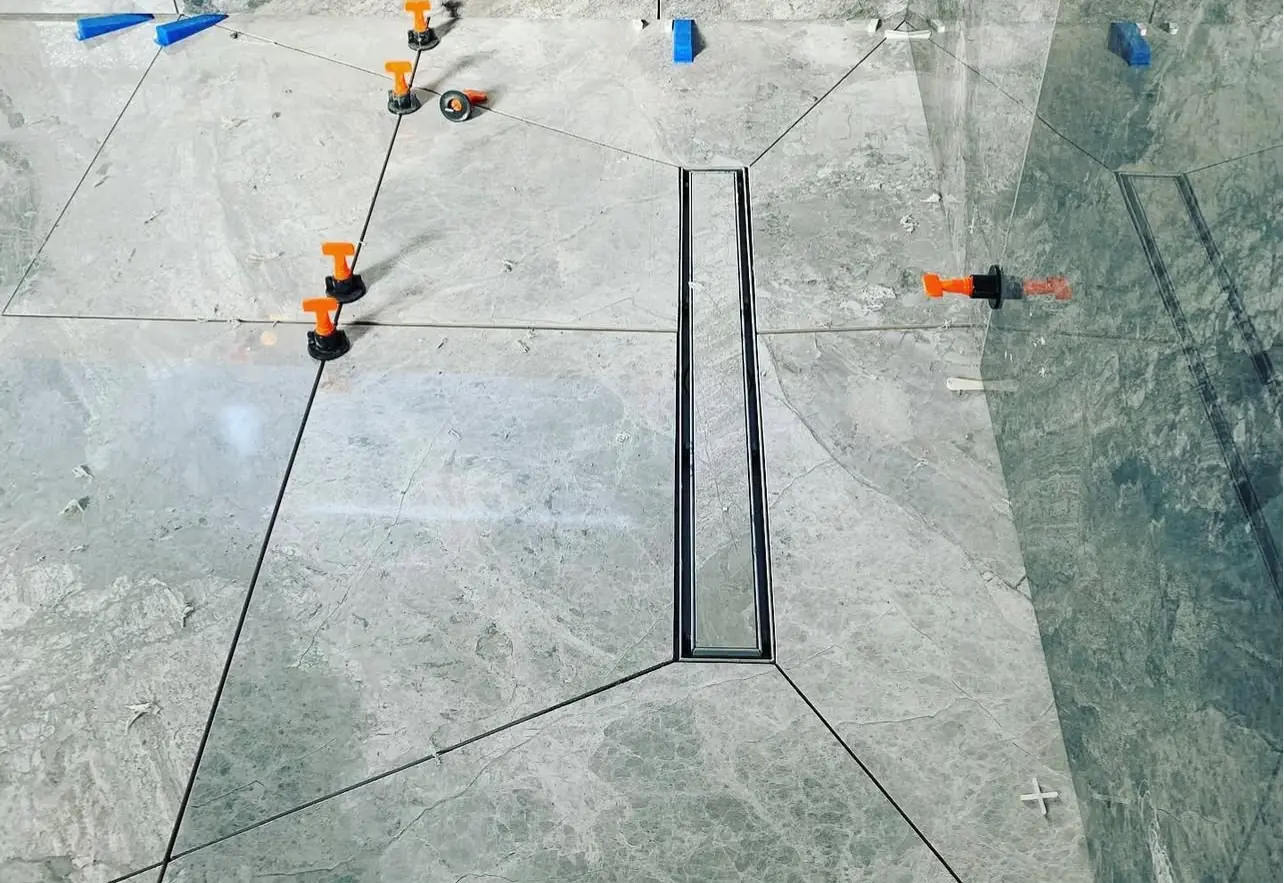
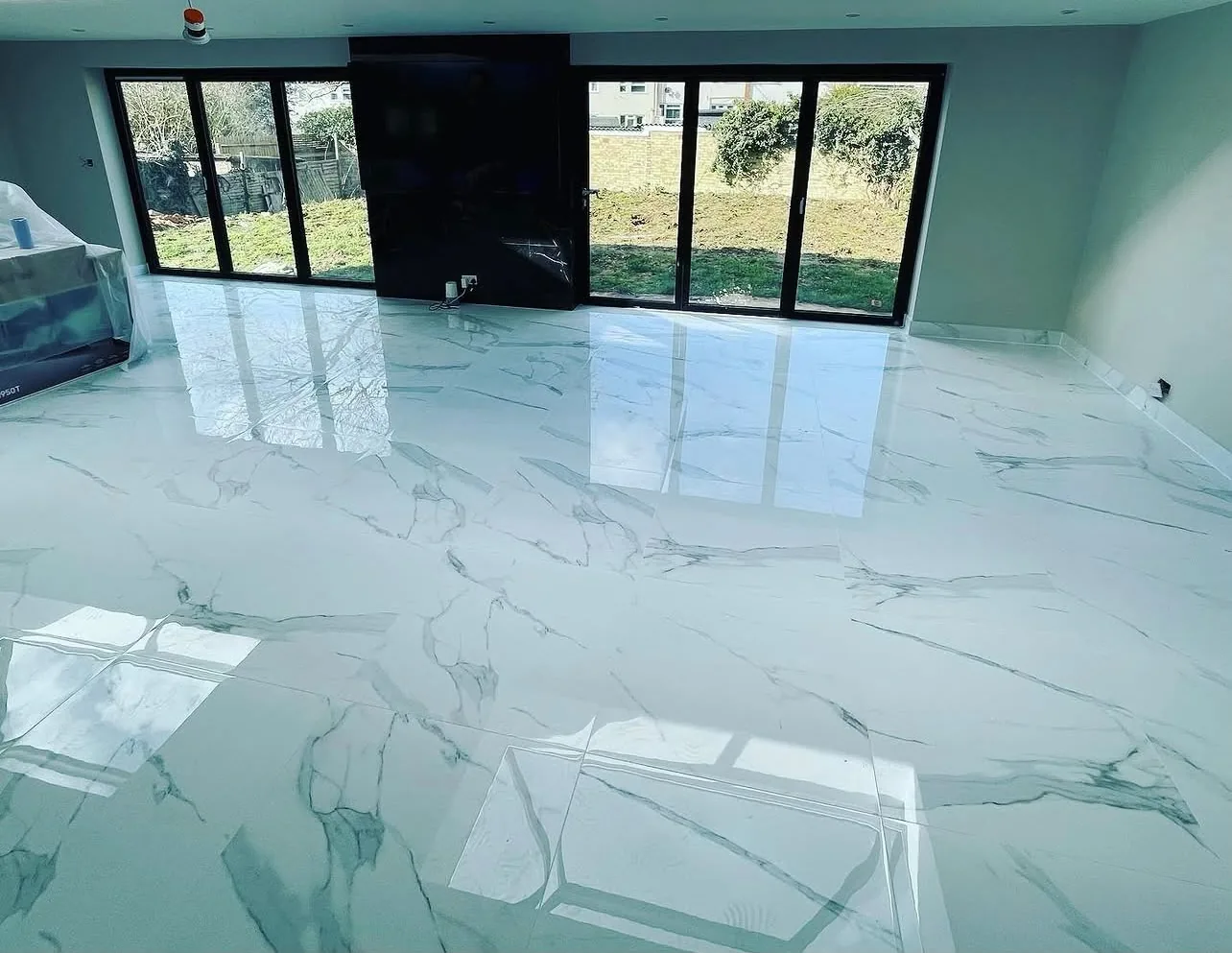
Tiles over 600x1200 need full back-buttering, a flat bed and laser-checked levels or every lip shows in raking light. Marble and light stone are sealed before grouting and fixed in white adhesive so nothing bleeds through.
Wet rooms and tanking
Wet areas get cement or foam board, two-coat tanking with taped joints and reinforced corners, formed falls and a linear drain. Tanking is never skipped to hit a price.
Tiling across St Albans
St Albans is about forty-five minutes west of Bishop’s Stortford, so jobs are booked as continuous days — set out, fix, grout, silicone — rather than trailing over three weeks. Conservation area rules bite in central St Albans, so external changes and window alterations are checked against the consent before work starts.